
Liquid Cooling
What is liquid cooling?
Liquid cooling is a method of heat management that uses non-conductive fluids, such as dielectric fluids, to efficiently transfer heat away from high-performance components like CPUs and GPUs. As AI workloads and high-performance computing (HPC) systems grow more powerful, they generate significantly more heat than traditional systems. Liquid cooling offers superior heat transfer efficiency compared to air cooling, enabling better thermal regulation and system stability. This improved cooling not only supports denser, faster hardware but also reduces energy consumption, making it a more sustainable and energy-efficient solution for modern data centres and AI-driven infrastructure.
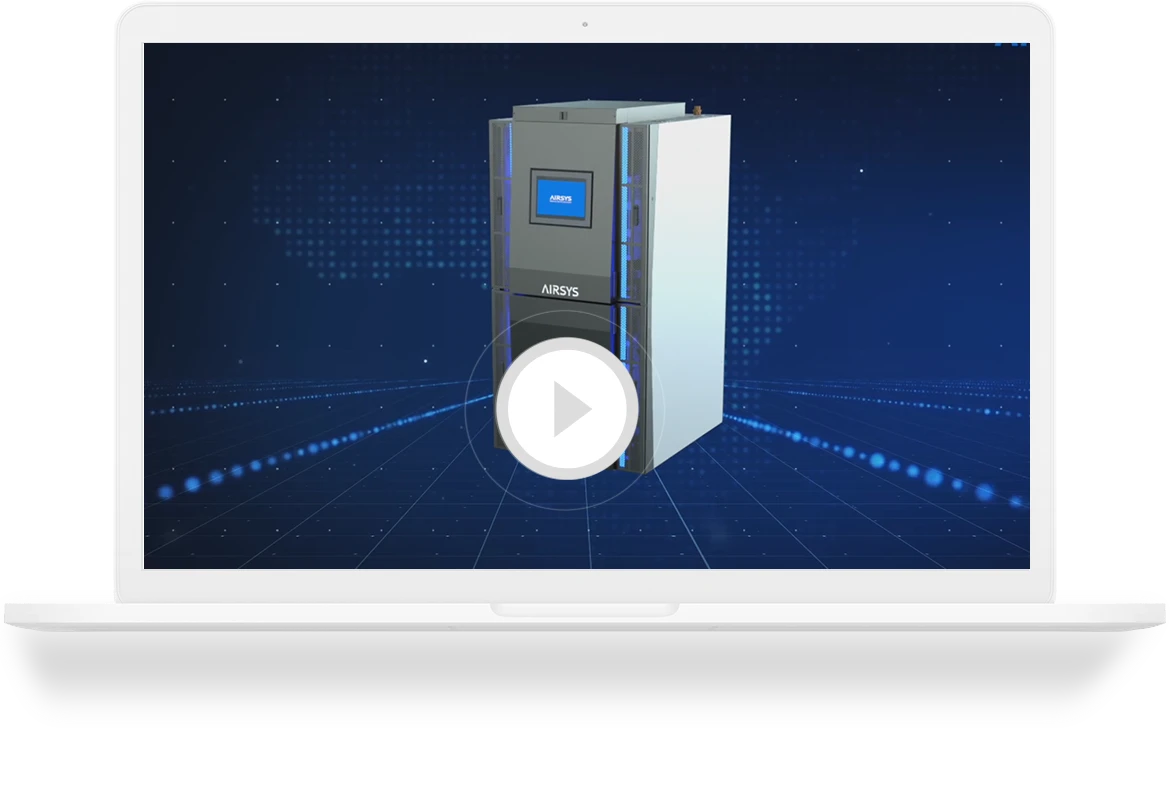
What is liquid spray cooling?
Liquid spray cooling is Airsys’ revolutionary approach to liquid cooling. The system, the LiquidRackTM, uses a heat exchanger dividing the system into two circuits: a liquid coolant circuit and a water circuit. The liquid coolant (dielectric fluid) is sprayed directly onto the heat emitting components of the server, removing the heat. The heated coolant then flows back to a plate heat exchanger and dissipates the heat into the water circuit where it can be recovered for heating and cooling applications. Liquid spray cooling greatly improves the heat transfer coefficient and reduces the amount of dielectric fluid required, when compared to traditional liquid cooling methods, such as immersion. With the ability to operate at higher liquid temperatures, without compromising CPU performance, the LiquidRack can eliminate the need for mechanical cooling, providing a free-cooling solution throughout the year. This low-power cooling solution frees up energy in the data centre, allowing operators to deploy more compute capacity—driving higher revenue and greater scalability.
What is liquid spray cooling?
LiquidRack can be rapidly deployed into new or existing data centres, with no need to provide centralised plant on day one, thereby providing reduced CAPEX investment and ensuring an ultra low partial PUE, free-cooling solution that can grow in line with customer demand. The LiquidRack’s unique design, using minimal dielectric fluid, means that the total system weight is significantly reduced, therefore it can be installed directly into existing facilities, offering liquid cooling as a viable retrofitting option for the first time.
Due to the improved heat transfer coefficient and higher rejection liquid temperatures, the LiquidRackTM liquid spray solution enables the Operator the ability to use the waste heat and turn the Data Centre into an energy producer, helping to achieve net-zero emission goals.
Liquid spray cooling vs immersion
Liquid spray cooling is the next step in the evolution of immersion liquid cooling, using forced-convection liquid sprays to remove heat more efficiently, without immersing the server. This approach delivers a significantly higher heat transfer coefficient, enabling greater cooling capacity even at higher fluid temperatures. Operating at these elevated temperatures reduces power consumption and achieves ultra-low partial PUE, outperforming traditional immersion systems.
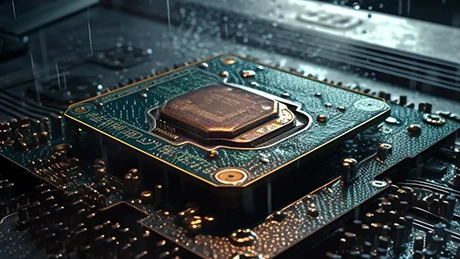
Liquid spray cooling
Liquid spray cooling vs immersion
The higher operating temperature also opens up far more opportunities to repurpose waste heat for hot water and space heating, as well as to implement free cooling solutions that eliminate the need for mechanical or refrigerant-based systems.
With its vertical design, liquid spray cooling integrates more easily into existing data centres than immersion tanks. Its minimal use of dielectric fluid not only reduces weight but also lowers CAPEX, making it a cost-efficient, scalable, and sustainable cooling solution.
Immersion cooling
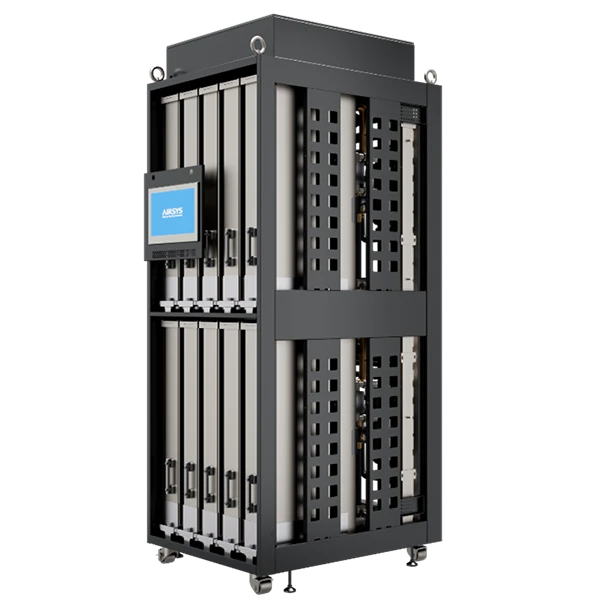
LiquidRack
The LiquidRack is a liquid cooling solution designed for multiple types of digital infrastructures.
Heat Reuse

Airsys’ LiquidRack™ spray cooling system is designed not only to maximise efficiency, but also to unlock the full potential of heat reuse. By capturing and repurposing the thermal energy generated by servers, LiquidRack™ transforms data centres from energy consumers into energy providers. This approach helps operators reduce their environmental footprint while supporting the transition toward sustainable, low-carbon operations. Rather than simply dissipating heat, LiquidRack™ makes it possible to turn this by-product into a valuable resource.
The recovered heat can be directed into a wide range of applications, from domestic and district heating to industrial processes, greenhouse climate control, and advanced refrigeration systems. By integrating heat reuse into the very fabric of data centre design, operators can lower energy costs, reduce emissions, and align with ambitious net-zero goals. With LiquidRack™, every data centre has the opportunity to become an energy centre — delivering both high performance and meaningful contributions to a more sustainable future.
Dielectric fluids
What is dielectric fluid?
Dielectric fluids are essential in liquid cooling systems used in data centres, where the fluid is in direct contact with the high-performance computing components. These fluids are electrically non-conductive, but thermally conductive, allowing them to be sprayed directly onto electronic hardware to remove the heat generated, with a greatly reduced risk of short-circuiting. A high thermal conductivity enables efficient heat absorption and removal, supporting higher power densities and improved energy efficiency compared to traditional air-cooling methods. Spray cooling systems offer precise, targeted cooling by supplying the cool dielectric fluid directly onto the hottest components first, before removing heat from the other components on the server by flowing across them. The now hot fluid is collected, cooled, and recirculated to enable continuous operation.
There are several types of dielectric fluids available, primarily hydrocarbon-based and plant-based formulations. Both offer strong thermal properties and durability, making them a reliable choice for demanding Data Centre environments. Hydrocarbon-based fluids offer a cost-effective solution, with a wide range of choices available on the market for different applications. Plant-based fluids, derived from renewable resources, offer a more sustainable alternative with greater biodegradability. The choice between these depends on factors such as performance requirements, cost, material compatibility, and environmental priorities. As data centres seek more efficient and eco-friendly cooling solutions, dielectric fluids are playing a key role in enabling the next generation of thermal management.
Castrol
Working alongside industry partners, Castrol’s immersion cooling fluids deliver reliable cooling performance whilst reducing energy and water usage. Castrol ON’s comprehensive range of single-phase immersion cooling fluids have been developed to meet the needs for data centre, edge computing, blockchain and other IT applications. Immersion cooling can help to increase the overall efficiency and sustainability of IT operation while ensuring hardware integrity due to material compatibility properties as well as ensuring safe operations. These fluids have been tested and been proven for use with leading tank- and rack-based liquid cooling systems.

Oleon
Oleon, a subsidiary of Avril, is a global leader in natural-based oleochemicals headquartered in Ertvelde, Belgium. With a focus on sustainability and innovation, Oleon developed the Qloe™ range of plant-based immersion cooling liquids for data centres. These single-phase fluids deliver reliable thermal performance while supporting energy efficiency and reducing environmental impact. Combining performance, safety, and long-term stability, Qloe™ fluids help data centres adopt immersion cooling solutions aligned with both operational and sustainability goals. Oleon continues to explore bio-based innovations to meet the evolving needs of modern IT infrastructure.

AIRSYS UK LTD
245 Europa Boulevard,
Warrington, WA5 7TN
View on map
Telephone
+44 (0)1925 377 272
Useful Links
